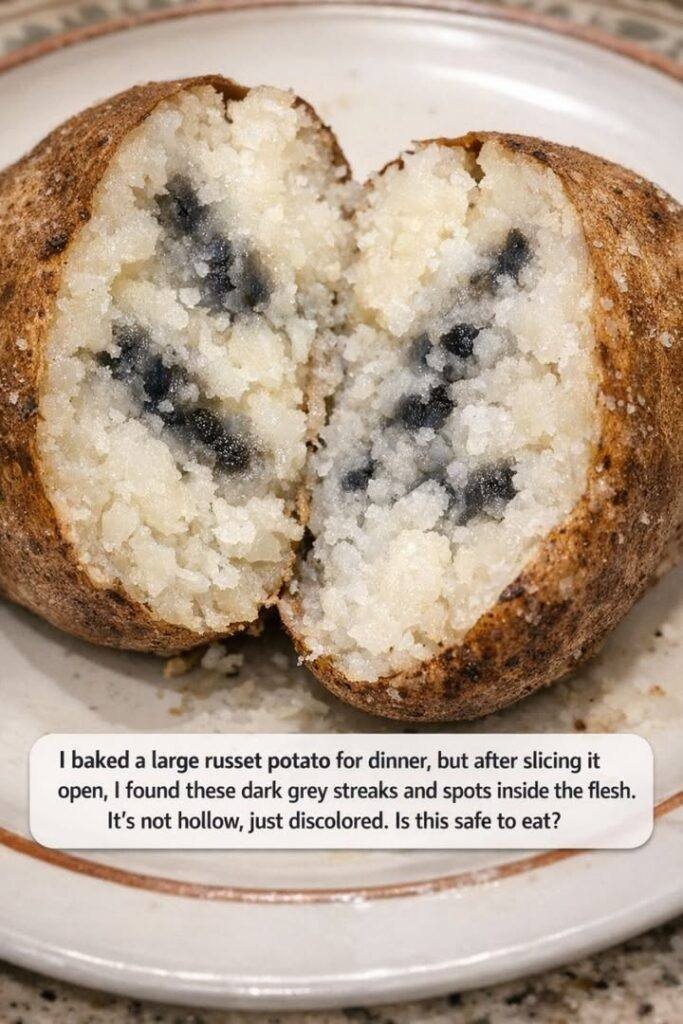
2. How Internal Black Spot Bruising Happens Before the Potato Reaches Your Kitchen
Internal black spots are primarily a result of mechanical damage to the potato. This damage can occur at several stages, including during harvesting, transportation, and storage. Potatoes are delicate despite their robust appearance, and rough handling can lead to bruising. When potatoes are dropped or jostled, the impact can cause the cells inside the potato to rupture, leading to the formation of black spots.
Temperature fluctuations can also play a role in the development of these spots. For example, if potatoes are stored at temperatures that are too low, it can increase their susceptibility to bruising. Additionally, potatoes stored in environments with high humidity can also develop these internal blemishes more readily.
3. When Discoloration Is Harmless Bruising Versus a Sign of Rot or Disease
While internal black spots are generally harmless, it’s crucial to differentiate them from signs of rot or disease. Harmless bruising appears as localized dark spots within an otherwise healthy-looking potato. The surrounding flesh should be firm and free from any slimy texture or foul odors.
On the other hand, if the potato has a strong, unpleasant smell, a mushy texture, or is accompanied by mold, it could be a sign of rot. Additionally, diseases like late blight can cause discoloration, but these typically affect the skin and extend deeper into the flesh in a more widespread manner. It’s essential to assess these factors carefully to determine whether the potato should still be consumed.
4. Simple Visual and Smell Checks to Decide If Your Potato Is Still Safe